
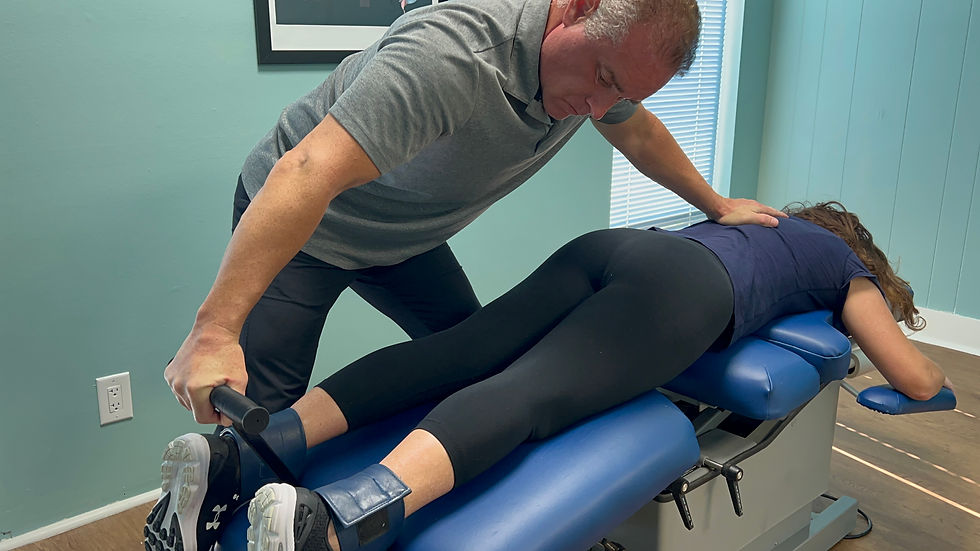
Flexion-Distraction Therapy for Sciatica, Neck Pain, Low Back Pain, and Disc Herniations
Flexion-distraction is a gentle chiropractic technique commonly used to help patients suffering from neck pain, low back pain, cervical disc herniations, lumbar disc herniations, sciatica, and nerve-related symptoms. Unlike forceful twisting or high-velocity adjustments, flexion-distraction uses a specialized chiropractic table to slowly stretch and mobilize the spine in a controlled and comfortable manner.
The goal of flexion-distraction therapy is to reduce pressure within the spinal discs, improve spinal motion, decrease nerve irritation, and support the body’s natural healing process.
When a spinal disc bulges or herniates, it can place pressure on nearby nerves and create symptoms such as:
-
Neck pain
-
Low back pain
-
Sciatica
-
Arm or leg pain
-
Numbness or tingling
-
Muscle tightness or weakness
-
Reduced mobility
Flexion-distraction helps create a gentle decompression effect on the cervical and lumbar spine, which may reduce stress on injured discs and irritated nerves.
How Flexion-Distraction May Help
Reduces Disc Pressure
Gentle stretching and flexion movements may help lower pressure inside the spinal discs. This can decrease stress on bulging or herniated discs and reduce irritation to nearby spinal nerves.
Opens Spinal Joint and Nerve Spaces
The motion helps increase the space around spinal joints and nerve openings (foramina), potentially reducing nerve compression associated with disc injuries and degenerative conditions.
Improves Mobility
Patients with neck and back pain often develop stiffness, inflammation, and protective muscle guarding. Flexion-distraction encourages spinal movement without aggressive force, making it especially helpful during acute or painful episodes.
Improve Mobility & Find Relief from Sciatica
Sciatica can cause pain, numbness, and tingling that radiates from your lower back down your leg, making everyday activities difficult. Chiropractic care focuses on improving spinal alignment, reducing nerve irritation, and restoring proper movement.
With personalized treatment, many patients experience reduced pain, improved mobility, increased flexibility, and a better quality of life. Whether your symptoms are recent or have been ongoing, chiropractic care can help you move more comfortably and get back to the activities you enjoy.
Decreases Muscle Spasm and Guarding
The slow rhythmic motion can help relax tight muscles in the neck and low back, reducing muscle spasm and tension patterns that contribute to pain and restricted movement.
Promotes Circulation and Healing
Movement within the spine may improve fluid exchange and nutrient delivery to discs, joints, and surrounding soft tissues, supporting recovery and tissue healing.
Comfortable for Acute Disc Injuries
Because flexion-distraction is gentle and controlled, many patients with severe pain, disc herniations, or nerve symptoms tolerate it better than traditional manual spinal manipulation.
Combining Flexion-Distraction with Rehabilitation
For the best long-term results, flexion-distraction therapy is often combined with:
-
Core stabilization exercises
-
Therapeutic rehabilitation
-
Posture correction
-
Mobility training
-
Stretching programs
-
Activity modification
Strengthening the core and improving spinal mobility are especially important for disc injuries because they help reduce repetitive stress on the spine during daily activities, lifting, bending, and prolonged sitting.
Conditions Commonly Treated with Flexion-Distraction
-
Cervical disc herniation
-
Lumbar disc herniation
-
Sciatica
-
Degenerative disc disease
-
Facet joint irritation
-
Spinal stiffness
-
Chronic neck pain
-
Chronic low back pain
-
Radiculopathy
-
Pinched nerves
Important Medical Considerations
While many patients experience significant relief, results vary depending on factors such as:
-
Severity of the disc injury
-
Degree of nerve involvement
-
Inflammation levels
-
Overall physical conditioning
-
Consistency with rehabilitation
Certain symptoms require immediate medical evaluation, including:
-
Progressive arm or leg weakness
-
Loss of bowel or bladder control
-
Severe numbness
-
Sudden worsening neurological symptoms
A Conservative, Non-Surgical Approach
Flexion-distraction offers a conservative, non-invasive treatment option for many patients dealing with neck pain, low back pain, and disc-related conditions. By reducing spinal stress, improving mobility, and supporting healing, it may help patients move better, decrease pain, and return to normal daily activities more comfortably.