
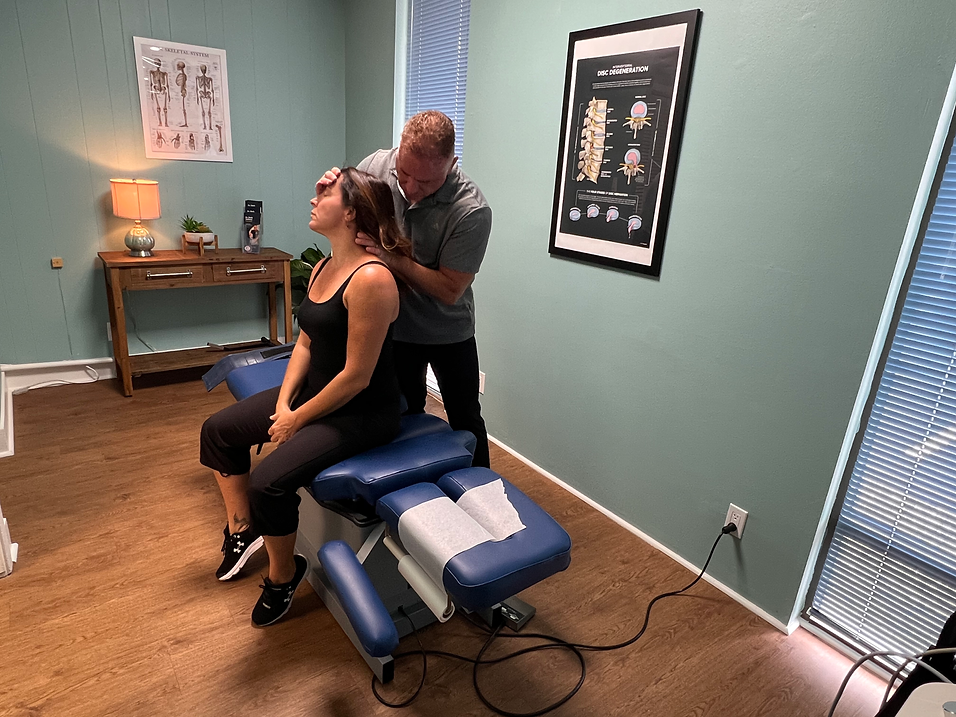
Recovery After a Motor Vehicle Accident
After a motor vehicle accident, I often see patients dealing with more than just pain—they’re dealing with stiffness, limited movement, inflammation, muscle spasms, and a body that just doesn’t feel like itself anymore. Even a “minor” collision can create whiplash, low back pain, headaches, shoulder injuries, and nerve irritation that may not show up right away.
My goal is to help patients not only feel better, but actually recover properly so these issues don’t turn into long-term problems.
Whiplash Injuries
Whiplash is one of the most common injuries I see after a motor vehicle accident, even in low-speed collisions. It happens when the head is suddenly forced forward and backward, placing stress on the muscles, ligaments, joints, and nerves of the neck.
Many patients don’t feel the full effects right away. Symptoms can show up hours or even days later and may include neck pain and stiffness, headaches, dizziness, shoulder pain, fatigue, or pain that radiates into the arms.
What I often find in whiplash cases is that the neck loses normal motion and the surrounding muscles go into protective spasm. This can create inflammation, joint restriction, and irritation of the nervous system, which is why symptoms can feel widespread and persistent.
My focus in treating whiplash is to restore proper movement, reduce inflammation, and help the soft tissues heal correctly. Depending on the severity, care may include gentle chiropractic adjustments, flexion-distraction therapy, shockwave therapy, and specific rehabilitation exercises to rebuild strength and stability in the neck.
The goal is not just to reduce pain, but to restore normal function so the neck can move, support, and protect the body the way it should again.
Chiropractic Adjustments
Following an accident, spinal joints often become restricted or misaligned, which increases tension, pain, and inflammation in the surrounding muscles.
Gentle chiropractic adjustments help restore proper motion to these joints. When movement improves, pressure on the nervous system is reduced, muscles can relax, and the body begins to function more normally again. Early treatment can also help prevent the compensation patterns that often lead to chronic pain later on.
Shockwave Therapy
In many accident cases, soft tissue injury is a major part of the problem. Shockwave therapy allows me to target those damaged areas directly using acoustic sound waves that stimulate the body’s natural healing response.
This can help:
● Reduce muscle tightness and trigger points
-
Improve blood flow to injured tissues
-
Break down scar tissue and adhesions
-
Support tissue repair and regeneration
-
Decrease chronic inflammation and pain
It is especially helpful for stubborn neck and shoulder pain, low back tightness, and ongoing muscle spasm after a collision.
Flexion-Distraction Therapy
For patients with disc injuries, sciatica, or nerve-related pain, I often use flexion-distraction therapy. This gentle, non-force technique uses a specialized table to slowly stretch and mobilize the spine.
It may help:
-
Decrease pressure inside spinal discs
-
Reduce nerve irritation
-
Improve spinal mobility
-
Relax muscle guarding and spasm
-
Increase circulation to injured areas
Because it is gentle and controlled, it is often well tolerated even in acute or severe pain cases.
Therapeutic Exercise
In my experience, real recovery happens when we restore strength and movement—not just reduce pain. That’s why therapeutic exercise is such an important part of care after an accident.
These exercises are designed to:
-
Rebuild strength and flexibility
-
Improve posture and spinal stability
-
Restore balance and coordination
-
Correct faulty movement patterns
-
Reduce the risk of reinjury or chronic pain
Depending on the injury, this may include core stabilization, neck strengthening, stretching, and mobility training.
A Complete Approach to Recovery
When combined, chiropractic adjustments, shockwave therapy, flexion-distraction, and therapeutic exercise work together to address both the source of pain and the damage caused by the accident.
The focus is not just on getting out of pain—but on helping the body heal properly, restore movement, and return to everyday life with confidence.